INTERMODALITY | Our investment in rail
The Port of Tarragona believes wholeheartedly in intermodality as the way to optimise logistic chains and offer a better service to our clients, from both an economic and a sustainability point of view.
The Port of Tarragona has rail line with Iberian gauge throughout the Port, and more than 10km of mixed gauge (UIC & Iberian). Additionally, it has electrified access to the wharves and terminals of the Ribera zone, which is dedicated to general loads, containers and mobile boxes.
The Port of Tarragona has rail line with Iberian gauge throughout the Port, and more than 10km of mixed gauge (UIC & Iberian). Additionally, it has electrified access to the wharves and terminals of the Ribera zone, which is dedicated to general loads, containers and mobile boxes.
+info
Rail in the Port
ADIF-PORT
2 points of connection to the general network
INTERNAL NETWORK LINES
46 km
IBERIAN + UIC GAUGE
10.3 km
CAPACITY
5 lines of 750m
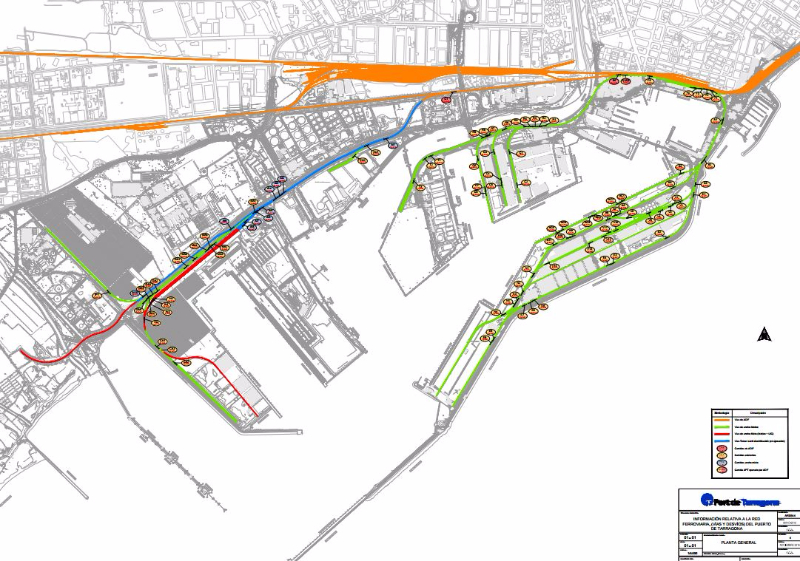
Internal network
Download the map of the internal rail network in the Port of Tarragona. The document has the information related to routes and diversions within the Tarragona port area
Internal network and connecting lines
The Port’s rail lines connect to the Saragossa-Madrid service, the service to Valencia, and the service to Barcelona, thereby connecting us to Europe.
The internal rail network of the Port provides services to the operational wharves. From east to west, there are three lines connecting the internal network of the Port to the network which belongs to ADIF, the rail infrastructure company of the Spanish State.
To the east, the first line runs through the Aragon Wharf to the Catalonia Wharf, in two parallel tracks throughout the coal terminal.
The second line runs in parallel to the left bank of the Francolí River. This second line provides access to the Castile Wharves (with three entrance points) and the Chemical Wharf, arriving at the Train and Chemical Station.
The third line, connected to the train line to Valencia, runs through the Hydrocarbons Wharf, and on to the Andalusia, Cantabria and Galicia Wharves. At the Galicia Wharf, there is the Boella Intermodal Terminal, next to the container terminal. This line also serves the areas of the Port which have general freight, such as the vehicles terminal, a multi-use terminal, and the future Logistic Activities Zone (ZAL).
The internal rail network of the Port provides services to the operational wharves. From east to west, there are three lines connecting the internal network of the Port to the network which belongs to ADIF, the rail infrastructure company of the Spanish State.
To the east, the first line runs through the Aragon Wharf to the Catalonia Wharf, in two parallel tracks throughout the coal terminal.
The second line runs in parallel to the left bank of the Francolí River. This second line provides access to the Castile Wharves (with three entrance points) and the Chemical Wharf, arriving at the Train and Chemical Station.
The third line, connected to the train line to Valencia, runs through the Hydrocarbons Wharf, and on to the Andalusia, Cantabria and Galicia Wharves. At the Galicia Wharf, there is the Boella Intermodal Terminal, next to the container terminal. This line also serves the areas of the Port which have general freight, such as the vehicles terminal, a multi-use terminal, and the future Logistic Activities Zone (ZAL).
Connected with the Hinterland
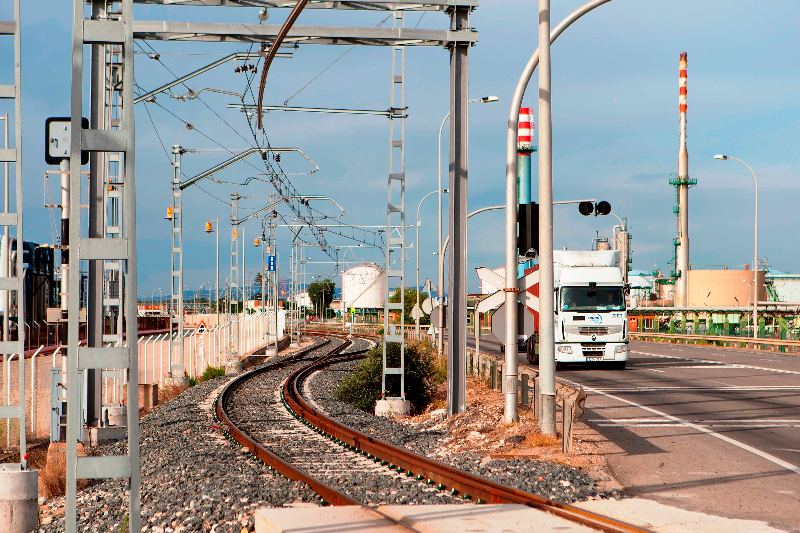
Logistic platform dor the Hinterland
TThe Port of Tarragona is well-positioned geographically in terms of its hinterland, being able to offer the maximum added value possible to its logistics chains.
Our Port has an enormous potential in the area of rail transport to the zones of Madrid, Valencia, and Saragossa. It is expected that the arrival of the standard European width and the entry into operation of the extension of the La Boella terminal and the new terminal in Guadalajara-Marchamalo will mean a new boost that will boost rail traffic in Tarragona.
The Port, if it wishes to increase its presence in this hinterland, requires the development of the existent rail infrastructure.
Area of influence
The location of the Port offers multiple possibilities for exports and imports of freight to the whole area of influence, and via the Mediterranean Sea itself.
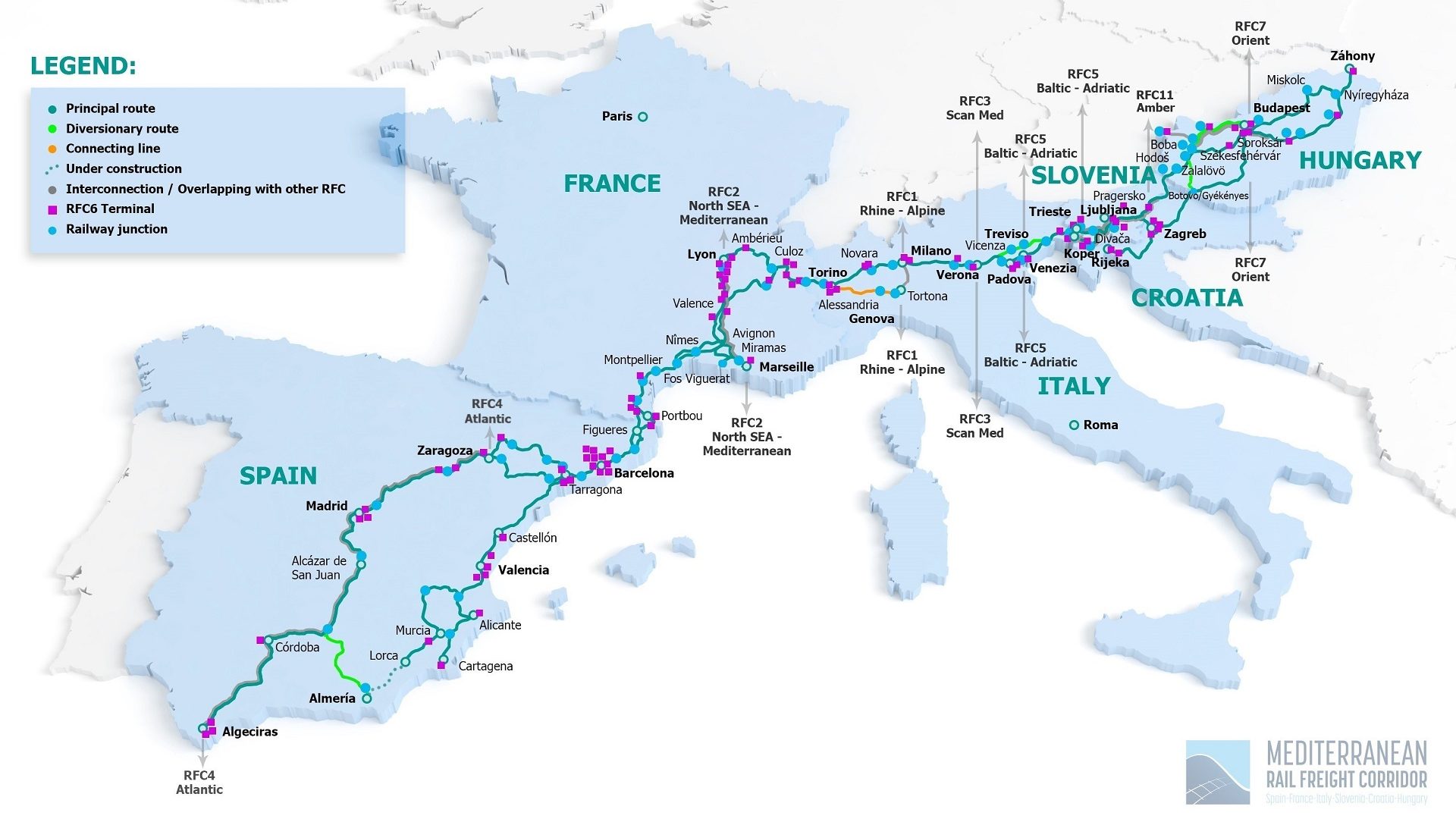
Tarragona is strategically located on the Mediterranean Corridor – it is the point of confluence of all the lines which unite the Iberian Peninsula and Europe.
Better connected with Europe
The Mediterranean corridor
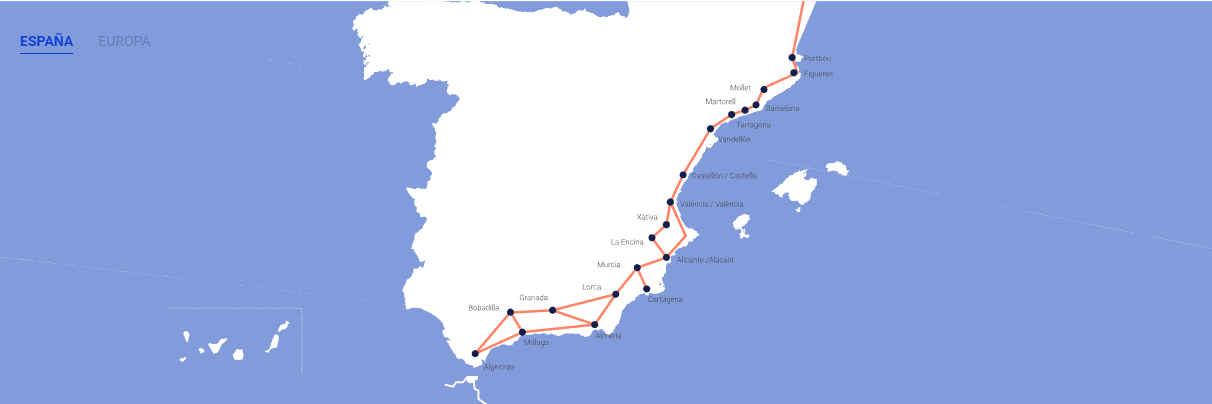
At the moment, the Port is prepared to receive the Mediterranean Corridor, known technically as the RFC6 Mediterranean, which will link the Spanish State, and in our case, Tarragona, to the TransEuropean Rail Network. This corridor will vertebrate Europe from north to south, with over 3,000 km of line covering enormous regions of the continent, which, in their stride, represent round 60% of European GDP.
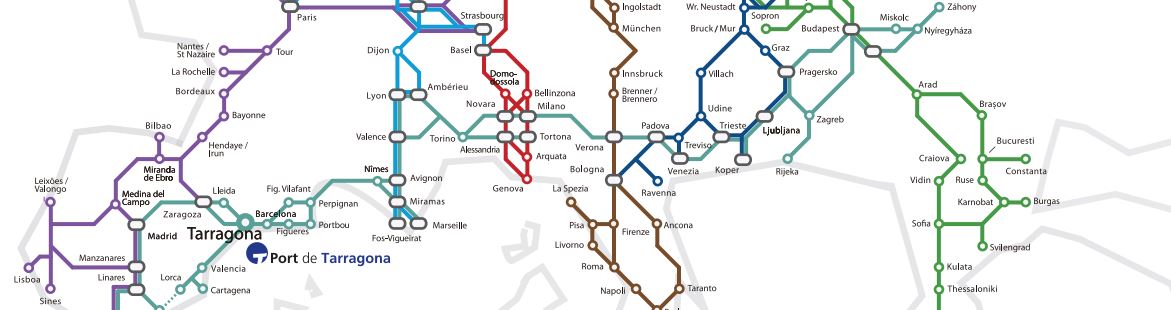
The Mediterranean Corridor starts in Spain and finishes in Hungary. It will go from Algeciras to the French border, passing through Granada, Almeria, Cartagena, Valencia, Tarragona and Barcelona, linking the main ports on the Mediterranean in the Spanish State. After crossing the border with France, the Corridor continues through the Alps, until the north of Italy, winding down the Adriatic coast, through Slovenia and Croatia, until it reaches its destination in Hungary.
Rail access from the Mediterranean ports, and specifically from the Port of Tarragona, will mean major savings in costs, as well as an improvement in efficiency and sustainability in the logistics chain. Intermodality and connectivity will also be improved between Tarragona and its hinterland, and indeed between Tarragona and the rest of Europe. At the moment, the Port of Tarragona is preparing itself for the arrival of the Mediterranean Corridor, and has more than 10km of rail line with International Standard Gauge(UIC).
The future
In the future, the Port of Tarragona will be connected to the General Interest Rail Network using UIC gauge. It will thereby have, in the coming years, a direct access to the Mediterranean Corridor, projected in the context of the new European rail structure for both freight and passengers.
Tarragona will be Connected to the rest of the Mediterranean, and to the main commercial routes in Europe.
About Corridor
Official pages for more information on the network and state of the Mediterranean Corridor
TransEuropean Rail Network
Get to know the Trans-European Transport Network from the European Commission.
RFC6 Mediterranean
Visit this website that brings together and generates information about the state of the Corridor, to make it available to citizens.
Rail Europe - RNE
Facilitating international rail traffic across Europe
PortTarragona Terminal Guadalajara-Marchamalo



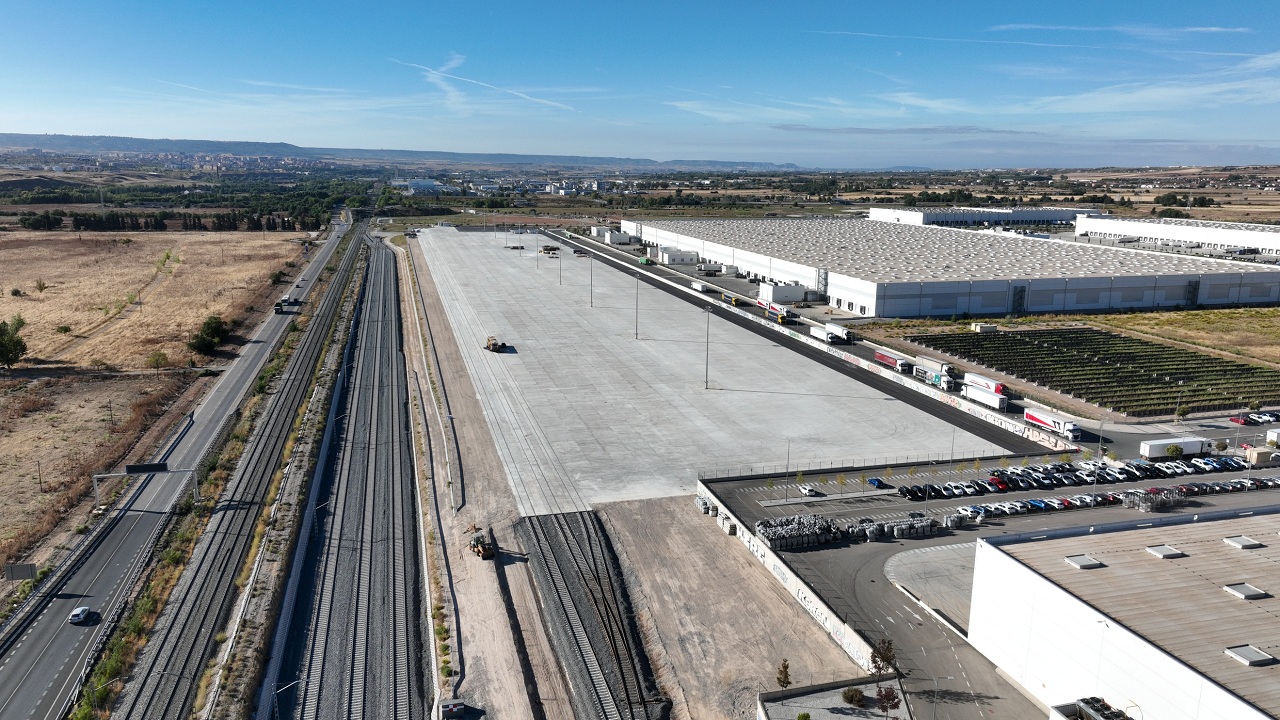
Port Tarragona has 150,000 m2 in 'Ciudad del Transporte Puerto Centro', important logistics and services platform on the area of influence of Madrid near Guadalajara and Marchamalo.
The ‘City of Transport’ will attract new maritime traffic to the Port of Tarragona from the centre of Spain and at the same time will attract continental traffic by rail.
8 km of Iberian-gauge track
Maximum draught
14 meters
+100,000 m2 of paved surfaces for loading and unloading, storage at height and other activities
3 750m-long loading and unloading tracks
Northern and Sourthern connection of the Core Network Corridor with the Mediterranean Corridor
Automatic signal and telecommunications systems
Proximity with the transatlantic corridor of the TEN-T network
19 points and crossings (5 escape tracks and 3 switches) to permit train manoeuvres
100m2 technical building with enclosed security zone
An important logistic platform
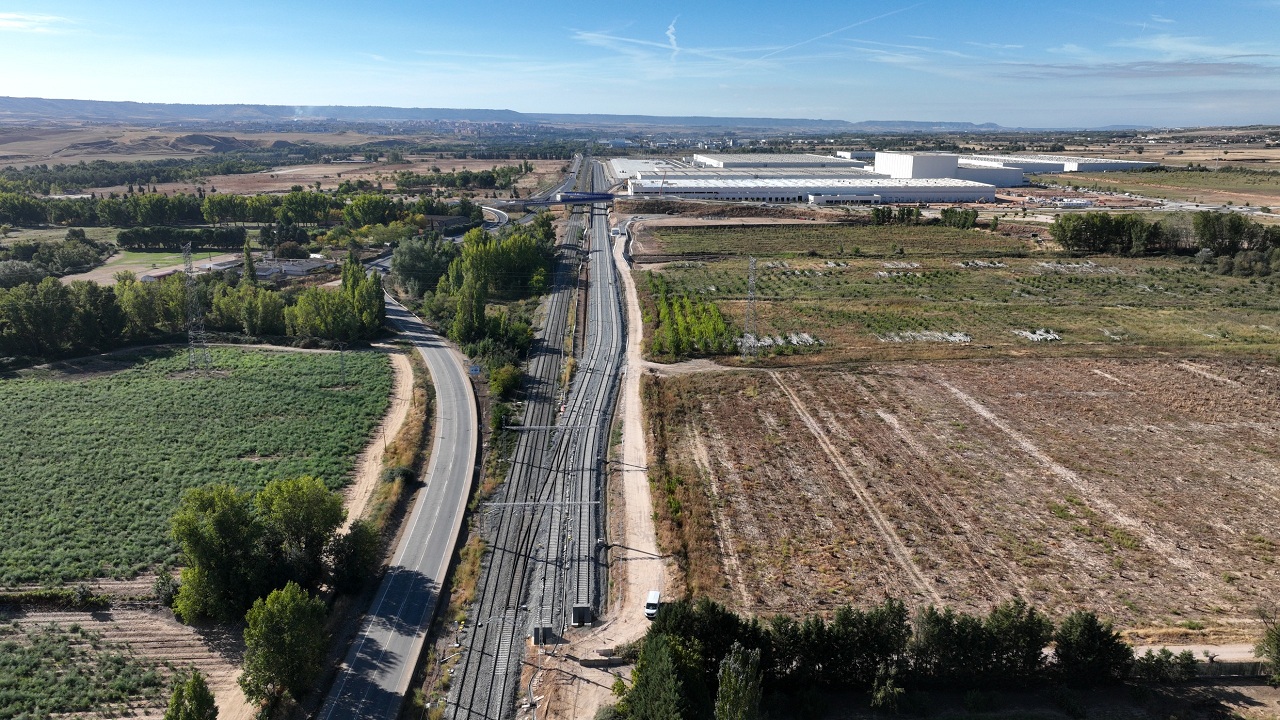
Port Tarragona and Puerta Centro-Ciudad del Transporte have consolidated the agreement that will allow the Catalan infrastructure to expand to the centre of the Iberian Peninsula and establish itself in what will be the most important logistics and service platform in Spain, with the capacity to channel the main flows of national, European and international goods between rail and road to the maritime ports and the centre of the country.
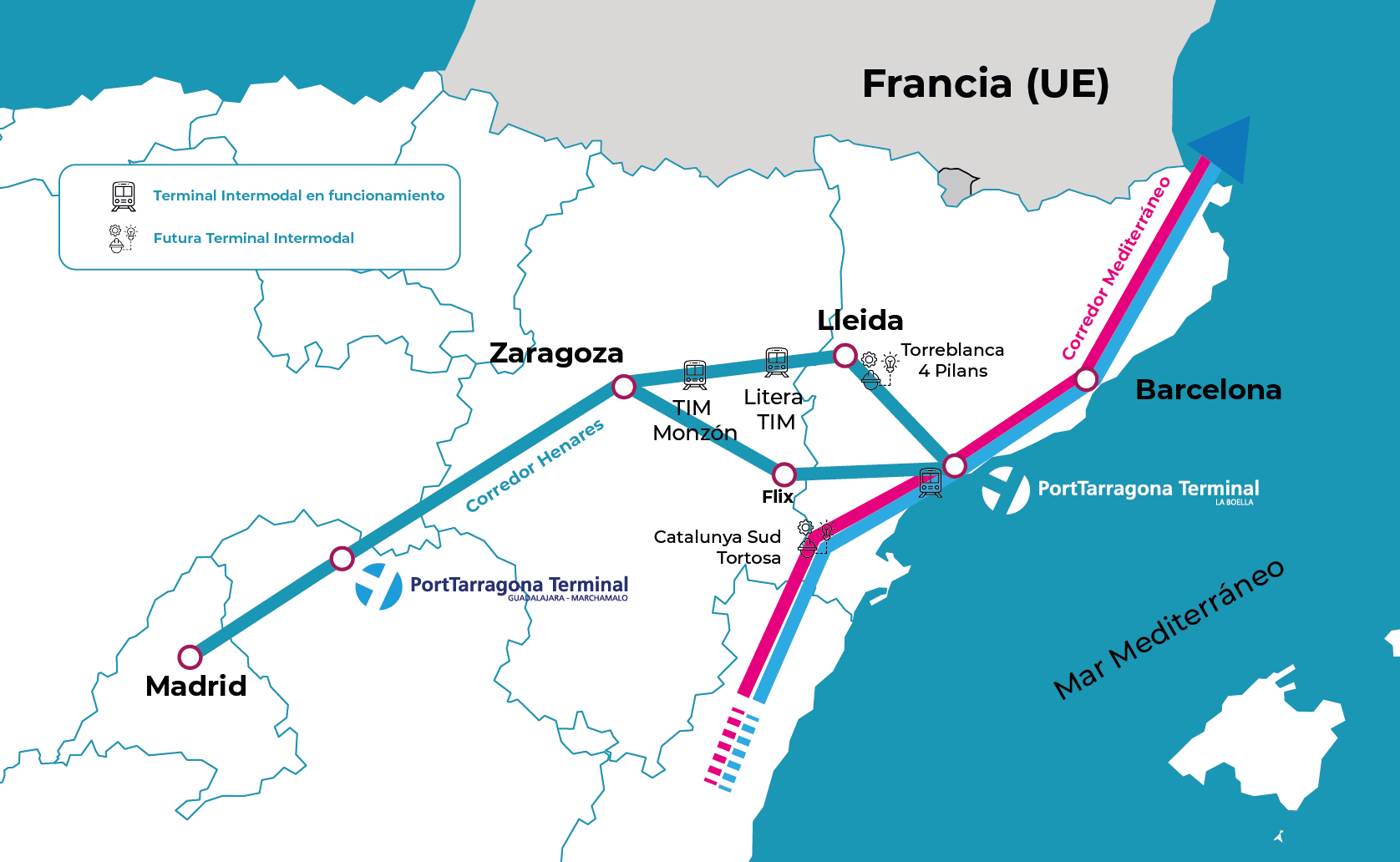
The main aim of Port Tarragona is to develop a multipurpose intermodal terminal in this strategic location between Guadalajara and Marchamalo (Castilla-La Mancha), 70 km from Madrid and connected to the main road and rail communication routes in the country.
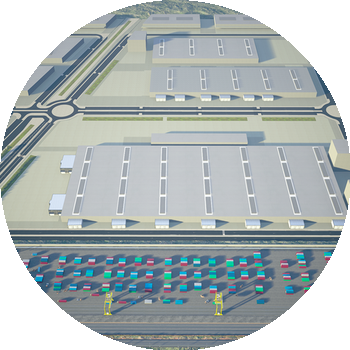
The future intermodal terminal, which will be called the PortTarragona Terminal Guadalajara-Marchamalo, will cover some 150,000 m2. This new infrastructure will be complemented by the La Boella Intermodal Terminal in Tarragona, and will promote the growth of intermodal rail-road and maritime traffic.
A Strategic Location in the Centre of the Peninsula
The Guadalajara Intermodal Terminal will be located in the Madrid corridor, the most dynamic area in the environs of Madrid, which boasts over 6 million inhabitants in a 60 km radius.
Thanks to its connectivity with the main ports of the Cantabrian coast (Bilbao, Santander) and the Mediterranean coast (Tarragona, Barcelona) and its location in an industrial environment, Guadalajara Intermodal Terminal will provide high capacity in terms of load volumes, fostering the development of intermodal transport of goods by rail.
With respect to road communications, the future terminal will be connected to main transport routes (R-2, CM-101, and A-2, European Route I-90) and the rail network on the Madrid-Tarragona / Barcelona-French border line.
Future Opportunities and Main Objectives
For Port Tarragona, the project is an excellent opportunity for intermodal growth through the development of this important multipurpose and multi-client terminal in the central Iberian Peninsula, which will connect with the main seaports on the Spanish coasts.
The infrastructure will be of supra regional and international standing and will be capable of channelling the main national, European and international flows of containers and breakbulk either to or from Madrid and its metropolitan area, which includes the Port, the cities of Guadalajara, Toledo, Segovia and Ávila. It will also be one of the main centres for the regional and metropolitan distribution of the Henares Corridor.
Rail companies have expressed their interest and have put forward offers for operating in PortTarragona Terminal Guadalajara-Marchamalo and in developing services in Port Tarragona between both terminals after being informed of the project and the La Boella intermodal terminal.
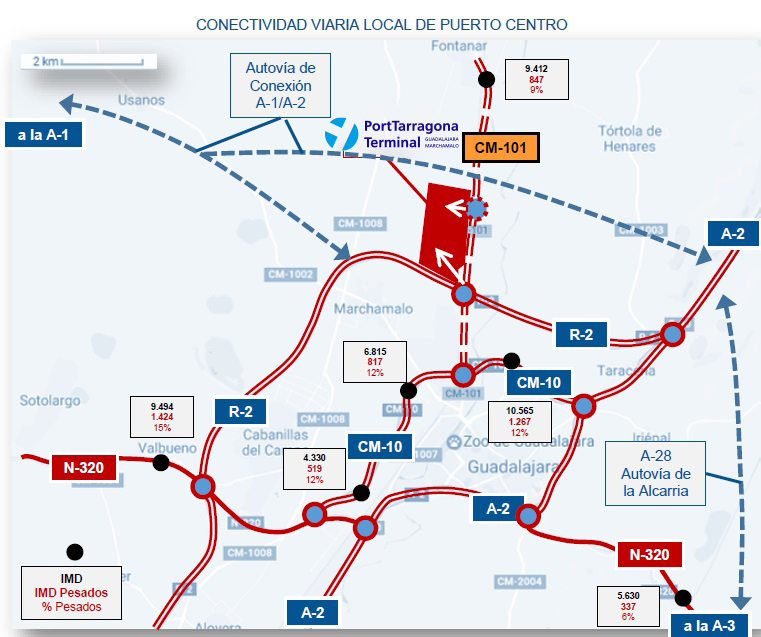
Local road connectivity
In terms of rail connections, the Ciudad de Transporte is connected to ADIF Line 200, which is a conventional gauge track and is connected to the Mediterranean Corridor rail network (Rail Freight Corridor 6) and allows linking to the Atlantic corridor via Zaragoza (north) or Madrid (south) (Rail Freight Corridor 4).
It is also outside the suburban railway network of Madrid, which will avoid it being limited by capacity constraints caused by metropolitan passenger traffic. This will mean notable savings in time and cost in terms of transport services and greater efficiency with respect to the infrastructures used for goods transport.
All of the above will allow goods stored in PortTarragona Terminal Guadalajara-Marchamalo to reach anywhere in the world through Port Tarragona and vice versa.
Commercial information
+34 977 259 400 | Ext. 1323

Dossier PortTarragona Terminal Guadalajara-Marchamalo- 2025 May version
Important terminal, multipurpose and multiclient. The project represents a great opportunity for growth in intermodality that allows the connection with the main Spanish seaports.
Total investment of 30M de
Intermodal Terminal La Boella
Public Terminal
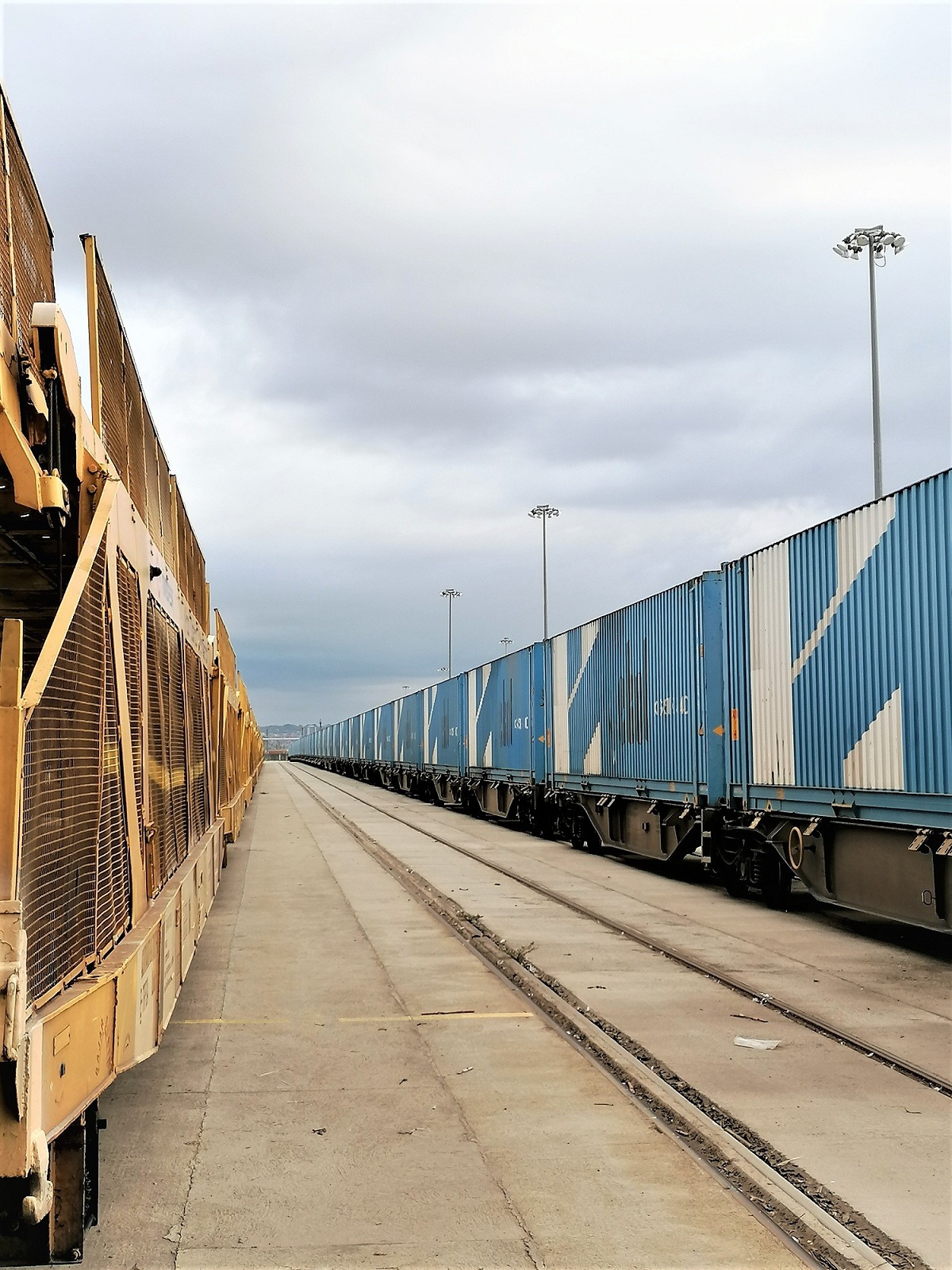
The intermodal terminal of the Port, currently called La Boella, is an intermodal freight rail terminal with both national and international origins and destinations.
The intermodal terminal La Boella is a public terminal at the moment, open to all types of freight. Its activity, and its intermodality, are both connected to rail and rail transport. From the receipt or delivery of goods to units of multimodal transport, with or without maritime connection, it is closely linked to the rail network.
The intermodal terminal La Boella is a public terminal at the moment, open to all types of freight. Its activity, and its intermodality, are both connected to rail and rail transport. From the receipt or delivery of goods to units of multimodal transport, with or without maritime connection, it is closely linked to the rail network.
Freight and intermodal unit integrated services
-Receipt, formation and dispatch of trains
-Loading and unloading of containers
-Depot services: storage, cleaning, repairs
-Loading and unloading of containers
-Depot services: storage, cleaning, repairs

Excellent connection
It has an excellent maritime connection, forming part of the very well-positioned Port of Tarragona.
The intermodal terminal aims to encourage imports and exports from and to Tarragona’s hinterland (Catalonia, Aragon and Madrid), facilitating commercial movements. As such, it is open to any businesses in the zone interested in rail transport and the possibilities offered by the intermodality available at La Boella, connecting rail to maritime and road transport.
The intermodal terminal aims to encourage imports and exports from and to Tarragona’s hinterland (Catalonia, Aragon and Madrid), facilitating commercial movements. As such, it is open to any businesses in the zone interested in rail transport and the possibilities offered by the intermodality available at La Boella, connecting rail to maritime and road transport.
Intermodal unit
-Loading and unloading of freight trains
-Consolidation and deconsolidation of cargo
-Consolidation and deconsolidation of cargo
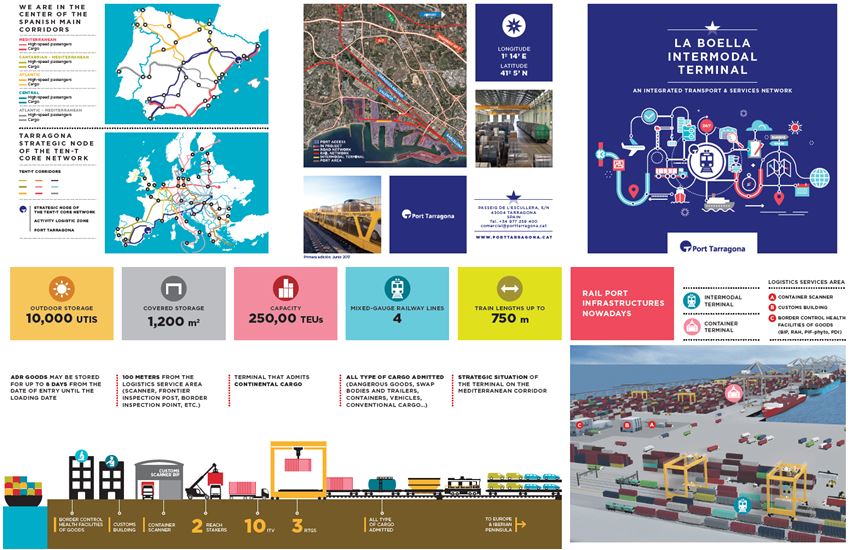
Current Surface area of 5 hectares with possibility to expand
5 lines with mixed gauge (Iberian and UIC) on concrete platforms
Circulation of trains of up to 750 metres in length
It can operate with all types of traffic: containers, mobile cranes, vehicles and trailers
Apt for use with Mobile cranes
Able to load and unload dangerous goods
Located close to the container scanner, for non-intrusive inspections
Electrified access
Terminal close to the Border Inspection Post
Capacity of 250,000 TEU
A privileged location
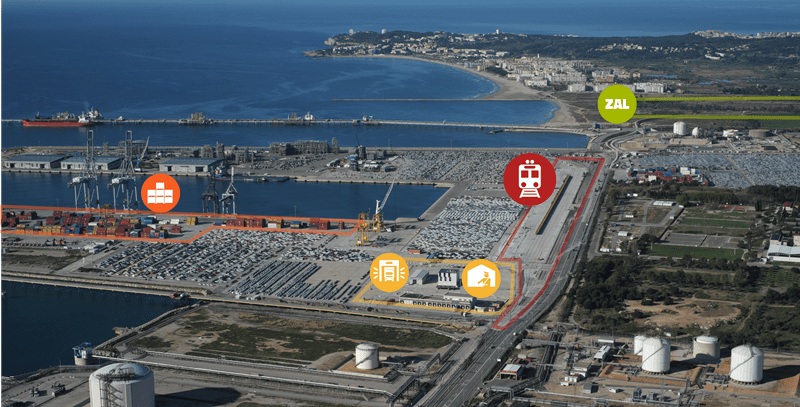
The Intermodal Terminal is situated strategically on the route of the Mediterranean Corridor, on the intersection of diverse connections to Europe and to the centre of the Iberian Peninsula.
Within the Port, the terminal is close to the ZAL (Logistic Activities Zone) and all the Health and Customs inspections services, including the container scanner, which permits non-intrusive inspections.
The added value of this intermodal terminal comes precisely from the proximity of the infrastructures most directly related to the traffic, control, inspection and transport of freight cargo.
Leaflet
The commercial triptych of the Intermodal Terminal “La Boella” is an informative and promotional tool that presents in a clear and visual way the main services, infrastructures and competitive advantages of the terminal.
More efficient logistics
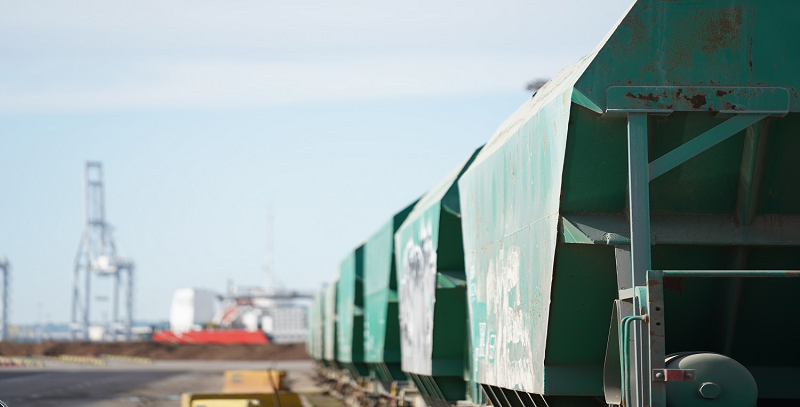
The Port of Tarragona actively promotes and supports intermodality, in order to optimise supply and logistics chains, and to offer clients a better service, both economically and in terms of sustainability.
The terminal should be taken into account by those companies which want to optimise costs and reduce emissions, and the terminal is also prepared for the new demands which will be made upon it by the market, having both European and Iberian rail gauge.
The use of rail reduces the comparative carbon footprint, improving the sustainability of the transport process.
Chemical wharf train station
IBERIAN GAUGE
200 metres
Chemical wharf train station
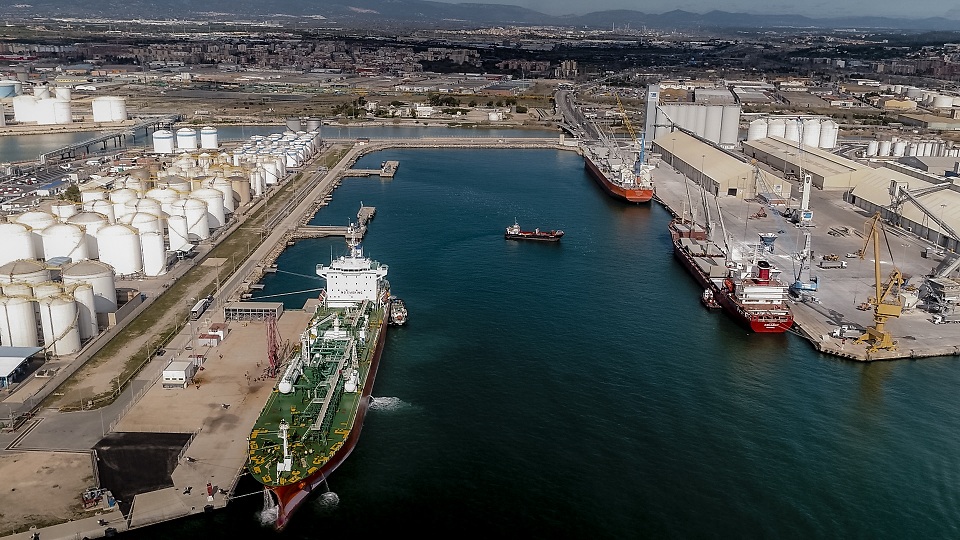
The public station situated on the Chemicals Dock makes it possible to connect the Port to the domestic market with three Iberian gauge lines. The station can receive trains of up to 200 metres in length, and is connected to the Vopak Terquimsa liquid storage terminal. The Euroenergo terminal has its own railway infrastructure available on the Hydrocarbons Dock.